

You wouldn’t expect to get fit without training. You’d hit the gym, build a routine, and show up even on the days you couldn’t be bothered. So why do we expect our heads to cope with everything life throws at us without any training at all?
Things are hard right now
Let’s be honest. Everything feels heavier lately, and there’s a lot of uncertainty about what’s down the line. Work, money, relationships, the constant noise of it all. Plenty of us are running on empty and just hoping it’ll sort itself out.
And sometimes that gets you through the week. But it’s not a long-term plan. That’s exactly why we’re hosting this free workshop for our clients, our friends and anyone who’s keen to turn up.
42.9% of Australians aged 16-85 have experienced a mental disorder at some point in their life, and 21.5% had one in the past 12 months.
Why mental fitness matters
Physical fitness doesn’t make life’s hard moments disappear. It means you’ve got more in the tank when they arrive. Mental fitness works the same way, and resilience can be the missing link.
Resilience isn’t about being tough or never feeling the weight of things. It’s not gritting your teeth and carrying on. It’s the ability to take a hit, find your footing, adapt and keep moving, and it’s a skill you can build over time rather than something you either have or you don’t.
When we only look after our heads once things have fallen apart, we’re always playing catch-up. Building mental fitness means putting in the work before the crunch: getting to know how you respond under pressure, what drains you, what steadies you, and what you can lean on when things get messy.
It’s also not just for people who are struggling. Plenty of people who are “fine” on paper are quietly running hot, and a bit of training now can make a big difference to how you handle whatever’s coming.
What is mental fitness?
Mental fitness is about building on what’s already working. It’s not about fixing what’s “broken”, because you’re not broken. It’s about noticing your strengths, getting clearer on what keeps you steady, and training the habits that help you handle the tough stuff when it lands.
Our very own Nelson Laconi takes a strengths-based, holistic approach to psychology. That means looking at the whole picture of your life, not just the problem in front of you, and giving you tools and practical actions you can actually bring into your everyday. Resilience grows out of exactly this: knowing your strengths, backing yourself, and having practical tools ready when you need them.
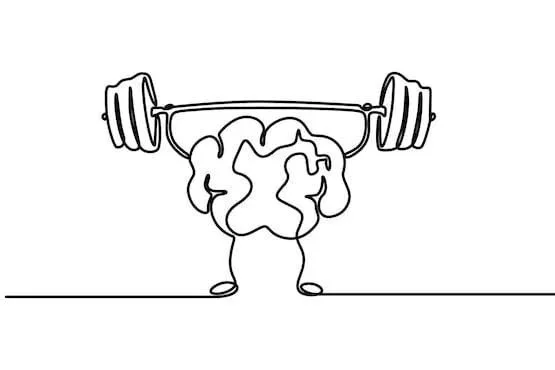
Across the whole of Australia, only 45.1% of people with a 12-month disorder saw a health professional.
What it looks like in real life
Mental fitness isn’t meditating on a mountain or journaling for an hour a day. It’s small, doable stuff, like:
Noticing what’s worked before. Looking back at the times you got through something tough, and recognising the strengths you used. That’s your resilience in action, even if it didn’t feel like much at the time.
Shifting how you talk to yourself. Catching the harsh internal commentary and swapping it for something more accurate and more useful.
Changing how you talk about the hard stuff. Finding words for what’s going on, whether that’s with a mate, a partner or a professional.
Bouncing back, not bottling up. Learning to recover after a rough patch instead of just pushing through and hoping for the best.
Taking small actions. Picking one or two doable steps instead of waiting for a big life overhaul.
Looking after the whole picture. Your sleep, your connections, your movement and your purpose all feed into how your head is travelling.
Like any training, it’s the small reps done consistently that count.
What to expect on the night
This isn’t a lecture or a pep talk. You’ll leave with practical tools you can use the next morning, not just a nice feeling that fades by Monday.
A relaxed, down-to-earth environment, no jargon and no judgement
A mix of practical tools and discussion
Time to reflect on your own strengths, the moments your actions made a difference, and the resilience you’ve already built
Hosts who are keen to meet you where you’re at
Come as you are, there’s no pressure to share anything you don’t want to
Who it’s for
Whether you’ve been doing your inner work for years or you’re not sure what any of this “psych stuff” even looks like, there’s a spot for you. Bring a mate or rock up solo. Current clients and fresh faces are all welcome.
Sometimes the bravest move is simply turning up.
Quick questions
Do I need to have seen a psychologist before?
Not at all. Some people come in with years of experience and others have never had the conversation. Both are welcome.
Can I bring a mate?
Absolutely, and we’d encourage it. Just make sure they grab their own spot.
Do I have to talk about my personal stuff?
Nope. You can take part as much or as little as you like.
Is this a replacement for therapy?
Nope again! It’s a practical, supportive session to build skills and get you thinking. If you’d like ongoing support, our team can chat about what that could look like.
What if I’m not sure it’s for me?
Come along and see. If you’ve read this far, there’s probably a reason
This evening workshop will be hosted by our very own senior psychologist, Nelson Laconi and myself, on the 26th of November at our North Sydney Practice from 6 PM.
Spots are limited, so don’t wait around. Grab your spot here:
https://www.eventbrite.com.au/e/mental-fitness-the-missing-link-free-workshop-tickets-2004877178611?aff=oddtdtcreator
Know someone who’d get a lot out of this? Send it their way. Sometimes, a mate dragging you along is all it takes.